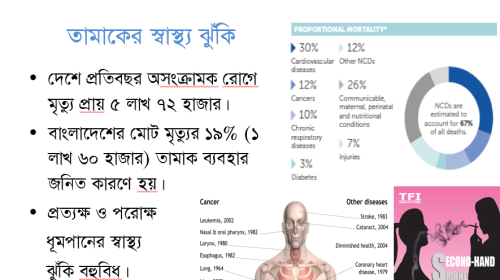
This presentation explores the economic and public health consequences of tobacco consumption in Bangladesh, highlighting how it creates a destructive cycle of poverty and illness. To combat these issues, the text analyzes various taxation frameworks, specifically comparing specific excise taxes—which are easier to manage and provide stable revenue—against ad valorem taxes, which fluctuate based on product value.
The source criticizes Bangladesh’s current complex tax structure for its multiple tiers and inconsistent tax bases, which the industry often exploits. To improve public health outcomes and government income, the author recommends simplifying the system by adopting uniform specific taxes and raising prices. Ultimately, the text argues that effective tax design is a vital tool for reducing smoking rates among the youth and the poor while fulfilling international development goals.